
How to grow
When to sow sweet peas in the UK and how to get them growing
Oct
By Anna, founder of Gardeners Box
A handful of sweet peas in a jar can perfume a room. That’s a fairly good return from a few seeds and a bit of string.
The sowing advice can make them sound more complicated than they are, though. Autumn or spring? Soak the seeds? Nip the tops off? And where, exactly, are all these pots meant to live until the weather improves?
I’d settle the last question first. When you sow sweet peas in the UK depends on the growing space you can give them afterwards. Here’s how to choose a date, get them started and keep them heading towards flowers.
Autumn or spring starts with somewhere to keep them
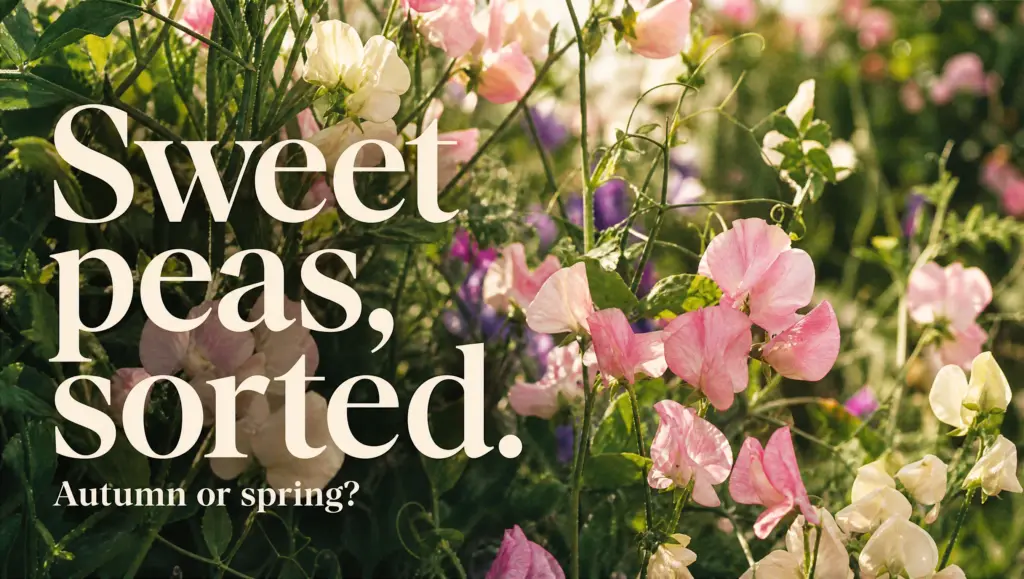
An October or November sowing can give annual sweet peas a head start, particularly in milder parts of the UK. It works best when you have a cool, bright place for the seedlings through winter, such as an unheated greenhouse or cold frame.
You’ll need to check the pots, water when necessary, ventilate in mild weather and protect young plants during severe cold. That’s a manageable job if you’re regularly in the garden. It may be a nuisance if your greenhouse is already full or you’re away for weeks.
Late winter or spring is a good option if you garden somewhere colder, lack winter protection or simply want fewer pots to look after in December. In many UK gardens that means sowing between February and April, with the exact timing guided by your local weather and the seed packet. Experienced growers in colder areas may start under protection in January or February.
For a first attempt, I’d choose a spring sowing if winter accommodation is awkward. You can still have lovely flowers. An autumn sowing offers an earlier start; it doesn’t guarantee a better summer in every garden.
Choose for scent and the space you have
We’re talking about annual sweet peas, Lathyrus odoratus. Check the packet’s description if fragrance matters to you, because its strength varies. Colour photographs tell you surprisingly little about scent.
Check the eventual height as well. Climbing sweet peas need a proper support and can reach around 2m. Compact types stay much shorter, some around 45cm, and may suit a container better. A small decorative twig won’t do the job for a vigorous climber.
Buy enough seed for the space you can plant. It’s tempting to sow the entire packet, but each healthy seedling becomes something you’ll need to water, support and find room for.
Sweet peas are ornamental. Their seeds and pods are poisonous if eaten. Keep them away from children and pets who might mistake the pods for something edible.
How to sow sweet peas
You’ll need deep pots or root trainers, seed compost, labels and somewhere bright for the seedlings. Deep containers give the roots room to grow before planting out. Make sure water can drain from the bottom.
- Fill the containers with compost and water it, allowing the excess to drain. Moist compost is easier to sow into than a dry pot you then have to drench.
- Sow one or two seeds per deep module, or a few in a larger deep pot, leaving room to separate the plants later. Cover with about 1cm of compost, unless the packet specifies otherwise.
- Label with the name and sowing date. Set the pots somewhere around 15–18°C for germination, following any different instructions on your packet.
- Keep the compost moist. Covering the pots can help retain moisture before germination, but remove the cover once the shoots appear and make sure the pots have air.
- When seedlings emerge, move them into a cool, bright position. A warm room can get them started; it’s usually too warm and dim for growing them on well through winter.
They often germinate in around one to two weeks at suitable temperatures, though some take longer. Check moisture and temperature before deciding a quiet pot has failed.
You don’t need to soak every seed overnight as a routine. Follow the supplier’s instructions for the seed you have; adding extra treatments just because you’ve seen them online can create more work than benefit.
After germination keep them cool and bright
This is the bit that makes a difference. Seedlings in a warm, gloomy room stretch towards the light, producing long, weak stems. Give them a cool, bright place and enough space between pots for air to move.
For autumn-sown plants, a cold frame or unheated greenhouse usually offers a better arrangement than a kitchen windowsill. Check the forecast and add protection during severe cold, especially while the plants are small. Containers expose roots to cold more readily than the ground does.
Water when the compost needs it, rather than because it’s Saturday. Lift a pot to get a feel for its weight and check the surface. Keep it moist enough for growing roots, without leaving it saturated. Open the greenhouse or cold frame for ventilation in mild weather and close it before temperatures drop.
If you’re spring sowing indoors, the same light rule applies. Move seedlings into bright, cooler conditions after germination, then gradually prepare them for life outside.
Do you need to pinch out sweet peas?
Pinching out means removing the soft growing tip to encourage side shoots. For spring-sown seedlings, wait until there are at least two pairs of true leaves, then gently nip out the tip just above a leaf joint. Keep the leaves below it.
Autumn-sown plants often branch naturally while growing slowly through winter. Look at the plant before reaching for the scissors. If it already has healthy side shoots, there’s no prize for removing more.
A tall, spindly seedling also needs better light and a cooler position. Pinching the top won’t fix the growing conditions on its own.
Plant out with the support already in place
Choose a sunny spot with fertile soil that drains well but holds some moisture. Put a wigwam, netting or another sturdy climbing support in place before planting. It’s much easier without roots and stems in the way.
Gradually get protected plants used to outdoor conditions over a couple of weeks, taking longer if the weather is cold. Hardy, acclimatised plants can often go out in March or April, depending on your garden. Avoid frozen or waterlogged ground and protect young plants if a severe cold spell is forecast.
Plant roughly 20–30cm apart, following the packet if it differs. Water them in and guide the first shoots towards the support, using soft ties loosely where needed. Don’t bury a tight knot in the stem as it thickens.
For pots, choose a generous container with drainage, a support that won’t topple and room for roots. A climbing sweet pea in a tiny pot will need constant attention once summer arrives.
Keep the flowers coming
Once the plants are growing strongly, keep an eye on moisture, particularly in containers. Water thoroughly when needed rather than giving a token splash every day. Feed container plants according to the compost and fertiliser instructions.
Pick flowers regularly. You get a little scented bunch indoors, and removing flowers before they turn into seed pods helps the plant keep flowering. Snip off any pods you’ve missed unless you’re deliberately saving seed later in the season.
If flowers slow down, check for dry roots, pods left on the plant and weather stress. A plant struggling in a hot, dry container needs attention below the flowers as well as a tidy-up above them.
Put the support somewhere you’ll pass often. You’ll notice when the plants need tying in, and you’ll be much more likely to pick those flowers.
Are you an autumn sower, or are you saving the windowsill for spring? Tell me how you grow yours in the comments.

Example box shown. Seed selections change each month.
Fancy a fresh growing idea each month
Once you’ve made room for a few pots, there’s plenty more to try through the seasons. Gardeners Box sends eight seasonally chosen seed varieties for UK gardeners each month, with a printed growing booklet and wooden plant markers. Green fingers optional.
Find your Gardeners Box